
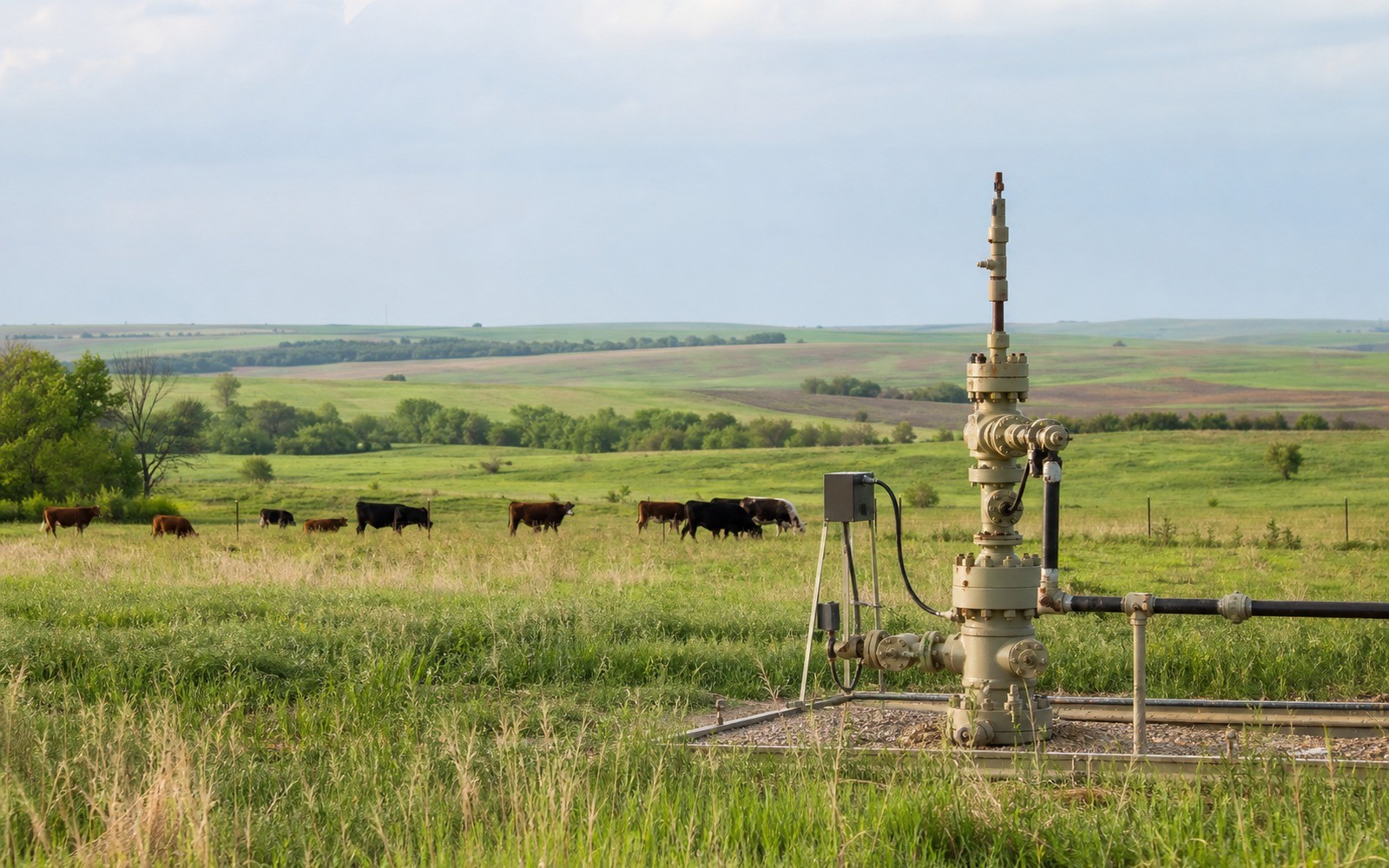
Producing vs. Non-Producing for Investors
Producing minerals offer evidence that can be measured today; non-producing minerals offer property rights whose future development remains conditional.
Producing Interests Start With Observable Cash Flow
A producing interest can be tested against royalty statements and public well records. The underwriting file should reconcile the paid decimal, monthly volumes, product mix, realized prices, taxes, deductions, downtime, adjustments, well status, operator history, and decline. Current production reduces one category of uncertainty, but it does not remove commodity exposure, title risk, shut-ins, mechanical failure, or physical depletion.
Well age and concentration matter. A package supported by one high-rate recent completion has a different risk profile from a package receiving similar revenue across several mature units. A normalized cash-flow line should separate recurring revenue from suspense releases or corrections and should show the effective date used in an acquisition.
Non-Producing Interests Require an Inventory Case
A non-producing tract may be leased, unleased, held by production elsewhere in a pooled unit, permitted, offset by active drilling, or entirely outside a current operator plan. Those are different positions. Value depends on the exact acreage and depths, lease terms, expiration, spacing, permits, offset performance, infrastructure, formation quality, regulation, operator behavior, and clean title.
The absence of current checks increases the importance of timing and probability. A buyer should state which evidence supports the inventory value and what happens if drilling is delayed or never occurs. Comparing producing and non-producing interests through one multiple hides the different assumptions that create their prices.
Separate Income Evidence From the Investment Thesis
A Colorado mineral package should be evaluated through a production ledger and an inventory line rather than one headline yield. The production ledger tracks monthly volumes, product mix, realized prices, deductions, taxes, adjustments, downtime, decline, operator performance, and the paid decimal. The inventory line tracks undeveloped acreage, permits, offsets, spacing, lease terms, title risk, and basin activity. Historical checks support the current-income analysis, but they do not guarantee future volumes, commodity prices, development, or distributions.
Document the Risks Around the Package
The investment brief should state concentration by county, operator, formation, well, and payor; distinguish producing, shut-in, permitted, and undeveloped interests; and show which title or lease assumptions remain open. Liquidity, tax treatment, commodity exposure, decline, operating decisions, regulatory changes, deductions, curative work, and future capital obligations can affect outcomes. Independent legal, tax, title, engineering, reserve, appraisal, and investment review may be appropriate before a buyer relies on a forecast or acquisition structure.
Keep the Underwriting Trail Auditable
The file should preserve the source date for every production series, statement, price assumption, lease term, ownership fraction, title conclusion, permit, offset, and development scenario used in the review. Base, downside, and upside cases should be labeled as scenarios rather than promises, and the buyer should be able to identify which line changes when volumes, prices, timing, deductions, ownership, or development assumptions move. A clear underwriting trail makes later diligence more useful because new evidence can update the relevant line without rebuilding an unexplained headline number.
Check the Assumption Before It Enters the Schedule
Are producing minerals always worth more than non-producing minerals?
Not automatically. Producing interests have measurable cash flow, while a high-quality undeveloped tract may carry significant inventory value. The evidence and scope control.
Does an active lease mean drilling is likely soon?
No. A lease establishes contractual rights and timing, but operator capital, permits, spacing, economics, and surface constraints still affect development.
What is the main risk in a one-well royalty?
Revenue concentration. Downtime, decline, mechanical issues, price changes, or unit adjustments affecting one well can move nearly the entire cash-flow line.